
AI-Powered Robots: How Intelligent Machines Are Reshaping Industry, Healthcare, and Daily Life
From warehouse floors to operating rooms, AI-powered robots are no longer science fiction. Explore how the fusion of artificial intelligence and robotics is transforming every sector of the economy.

Codmaker
Independent product lab
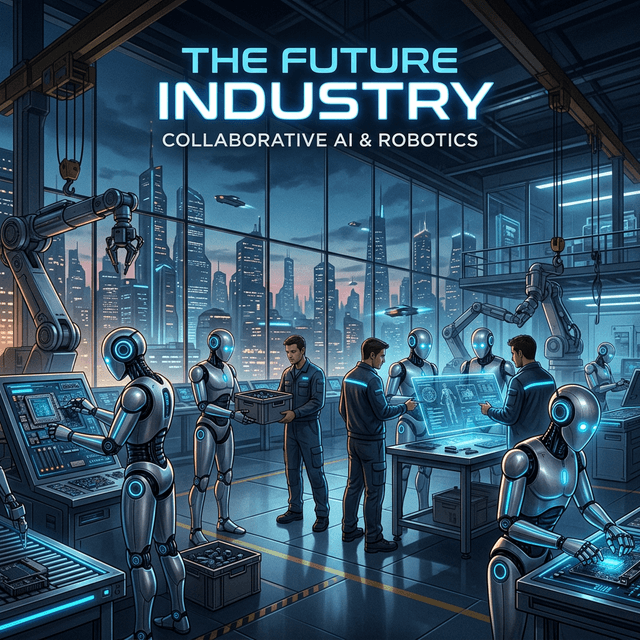
The Convergence of AI and Robotics
For decades, industrial robots were powerful but rigid—capable of performing precise, repetitive tasks at superhuman speed, but utterly unable to adapt to unexpected situations. A traditional robotic arm on an automotive assembly line could weld the same joint thousands of times with perfect consistency, but would fail catastrophically if a part was positioned even slightly differently than expected. The integration of modern artificial intelligence has fundamentally changed this equation, creating robots that can perceive, reason, adapt, and learn in ways that bring them dramatically closer to the flexible intelligence of human workers.
The key breakthrough has been the application of computer vision and deep learning to robotic perception. Modern AI-powered robots can see and interpret their environment in real-time, identify objects they have never encountered before, and adjust their actions dynamically. Reinforcement learning allows robots to improve their performance through trial and error, developing skills that were not explicitly programmed. Natural language processing enables robots to understand and respond to verbal instructions from human workers, making collaboration more intuitive than ever before.
This convergence is driving a new generation of cobots—collaborative robots designed to work alongside humans rather than replace them. Unlike their industrial predecessors, which operated in caged-off areas for safety, cobots use AI-powered sensor systems to detect human presence and adjust their behavior in real-time, making them safe to work alongside without barriers. This has opened robotics to entirely new industries and use cases that were previously impractical.
The market for AI-powered robotics is growing at an extraordinary rate. Global spending on robotics and drones is projected to exceed $300 billion annually by 2027, with AI-enabled systems representing the fastest-growing segment. This growth is driven not just by large manufacturers but by small and medium businesses that can now afford flexible, easy-to-deploy robotic systems that adapt to their specific needs without extensive custom programming.
Robots in Healthcare: From Surgery to Companionship
Healthcare is experiencing one of the most profound transformations from AI-powered robotics. Surgical robots like the Da Vinci system have been in use for years, but the integration of AI is taking surgical robotics to an entirely new level. AI-enhanced surgical systems can now provide real-time guidance during procedures, highlighting critical anatomical structures, predicting potential complications, and even suggesting optimal surgical approaches based on analysis of thousands of similar cases. Surgeons report that AI assistance reduces error rates and shortens procedure times while improving patient outcomes.
Rehabilitation robotics is another rapidly growing field. AI-powered exoskeletons and rehabilitation robots help patients recovering from strokes, spinal cord injuries, and other conditions by providing precisely calibrated physical therapy. These robots can adjust resistance, track progress, and modify rehabilitation programs in real-time based on the patient's response, providing a level of personalized therapy that human therapists alone cannot achieve at scale.
In eldercare, AI-powered companion robots are addressing one of the most pressing social challenges of aging populations. These robots can remind patients to take medication, detect falls and call for help, engage in conversation to reduce isolation, and monitor vital signs for early detection of health changes. While they do not replace human connection, they provide a valuable supplement that allows elderly individuals to maintain independence longer and gives caregivers peace of mind.
Pharmacy automation has been quietly revolutionized by AI-powered robotic dispensing systems. These robots can fill prescriptions with near-perfect accuracy, manage inventory, check for drug interactions, and handle the logistics of medication distribution—freeing pharmacists to focus on patient consultation and clinical services that require human judgment and empathy.
- AI-enhanced surgical robots reduce error rates and shorten procedure times significantly
- Rehabilitation robots provide personalized, real-time adjusted physical therapy programs
- Companion robots address eldercare challenges: medication reminders, fall detection, conversation
- Pharmacy robots fill prescriptions with near-perfect accuracy, freeing pharmacists for clinical work
- AI-powered diagnostics robots analyze medical images with accuracy matching specialist physicians
Industry 4.0: Smart Factories and Autonomous Logistics
The manufacturing sector has long been at the forefront of robotic adoption, but AI is transforming what factories look like and how they operate. Smart factories—sometimes called 'lights-out' facilities—use networks of AI-powered robots that can operate continuously without human intervention. These robots handle everything from raw material handling and assembly to quality inspection and packaging, communicating with each other and with central AI systems to optimize production flow in real-time.
Quality control has been particularly transformed. Traditional quality inspection relied on human visual inspection or simple rule-based machine vision. AI-powered quality systems can detect defects that are invisible to the human eye, predict equipment failures before they occur, and identify patterns in defect data that point to upstream process issues. Companies implementing AI quality systems report defect rate reductions of 60-90% and dramatic decreases in waste and rework costs.
Autonomous logistics—the movement of materials within and between facilities—has become one of the largest applications of AI-powered robotics. Amazon's warehouse operations deploy over 750,000 robots that navigate autonomously, pick and sort items, and work in coordination with human packers. Similar systems are being adopted by logistics companies, retailers, and manufacturers worldwide, dramatically increasing throughput while reducing the physical strain on human workers.
The next frontier is fully autonomous supply chains, where AI-powered robots handle every step from manufacturing to last-mile delivery. Autonomous trucks are already operating in limited corridors, and delivery robots are common in many cities. The integration of these systems into coherent, AI-orchestrated supply chains promises to reduce costs, increase speed, and improve reliability—though it also raises important questions about labor displacement that society must address thoughtfully.
Ethical Considerations and the Human-Robot Future
As AI-powered robots become more prevalent, ethical questions that once seemed theoretical are becoming urgent practical concerns. Job displacement is the most discussed issue, but it is far from the only one. Questions about safety—who is responsible when an autonomous robot causes injury or damage?—are creating new legal frameworks and insurance models. Privacy concerns arise as robots equipped with cameras, microphones, and sensors collect vast amounts of data about the environments and people they interact with.
The concept of robot rights, once firmly in the realm of philosophy and science fiction, is beginning to enter practical discourse as AI systems become more sophisticated. While current robots are far from sentient, the trajectory of AI development means that society needs to begin establishing ethical frameworks for how we interact with increasingly intelligent machines. This includes questions about transparency (should a robot be clearly identifiable as artificial?), manipulation (is it ethical to design robots that exploit human emotional responses?), and autonomy (how much independent decision-making should we allow AI-powered systems to have?).
Perhaps the most important ethical consideration is ensuring that the benefits of AI-powered robotics are distributed equitably across society. Currently, the economic gains from robotics primarily flow to the companies and investors who deploy them, while the costs—in the form of job displacement—are borne by workers. Addressing this imbalance through education, retraining programs, social safety nets, and potentially new economic models is one of the defining policy challenges of the coming decade.
The most optimistic vision of the human-robot future is one of complementarity: robots handling the dangerous, repetitive, and physically demanding work that causes human injury and dissatisfaction, while humans focus on creative, interpersonal, and strategic work that provides meaning and fulfillment. Achieving this vision requires not just technological innovation, but thoughtful social and policy innovation that ensures the transition benefits everyone, not just those who own the robots.
Related reading
Apr 2, 2026
No-Code AI Platforms in 2026: How Non-Developers Are Building Intelligent Applications
The barrier between idea and AI-powered application has never been lower. No-code AI platforms are enabling business analysts, marketers, and entrepreneurs to build sophisticated intelligent applications without writing a single line of code.

Mar 30, 2026
AI in Cybersecurity: How Automated Threat Detection and Response Is Transforming Digital Defense in 2026
Cyberattacks are faster, smarter, and more frequent than ever. AI-powered cybersecurity systems are the only defense capable of matching the speed and sophistication of modern threats. Here is how AI is reshaping digital security.
Mar 15, 2026
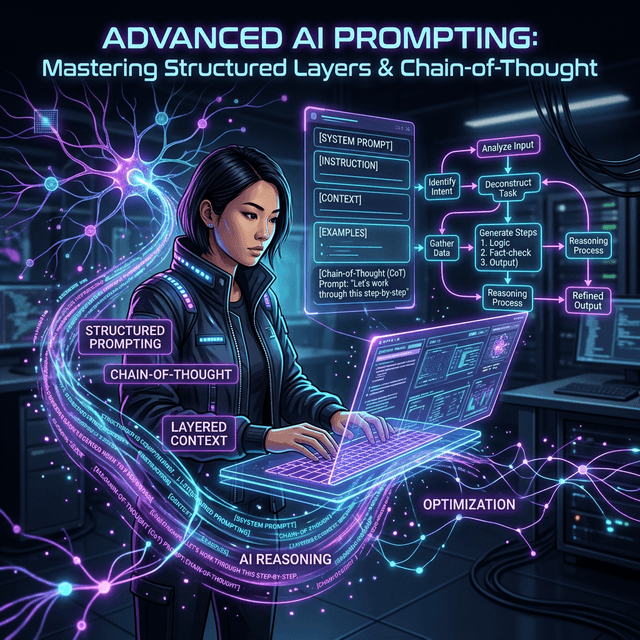
Advanced Prompting Techniques: System Prompts, Meta-Prompting, and Prompt Chains That Actually Work
Move beyond basic prompting. This deep dive covers system prompt architecture, meta-prompting strategies, multi-step prompt chains, and the advanced patterns used by professional AI engineers to get consistently excellent results.