

Why RAG?
LLMs don't know your private data. Fine-tuning is expensive and slow to update. RAG allows us to inject relevant context into the prompt at runtime. It's the difference between a generic answer and a business-specific insight.
The Architecture
I use Pinecone for vector storage and OpenAI's `text-embedding-3-small` for embeddings. The trick isn't the retrieval; it's the chunking strategy. RecursiveCharacterTextSplitter with meaningful overlap ensures context isn't severed mid-sentence.
The Reranking Step
Vector similarity isn't always semantic relevance. I add a Cross-Encoder reranker step (using Cohere) to sort the retrieved chunks before feeding them to the LLM. This dramatically reduces hallucinations.
Related reading

Mar 30, 2026
AI in Cybersecurity: How Automated Threat Detection and Response Is Transforming Digital Defense in 2026
Cyberattacks are faster, smarter, and more frequent than ever. AI-powered cybersecurity systems are the only defense capable of matching the speed and sophistication of modern threats. Here is how AI is reshaping digital security.
Mar 15, 2026
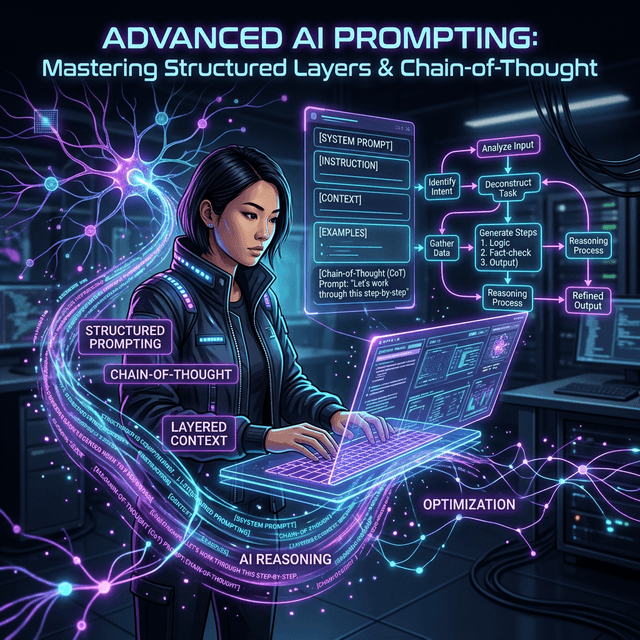
Advanced Prompting Techniques: System Prompts, Meta-Prompting, and Prompt Chains That Actually Work
Move beyond basic prompting. This deep dive covers system prompt architecture, meta-prompting strategies, multi-step prompt chains, and the advanced patterns used by professional AI engineers to get consistently excellent results.

Mar 13, 2026
GPT vs Gemini vs Claude vs Llama: The Definitive AI Model Comparison for 2026
Not all AI models are created equal. This comprehensive comparison breaks down the strengths, weaknesses, pricing, and ideal use cases for every major AI model available today.